Why Most Eco-Farm Projects Never Reach Financial Balance
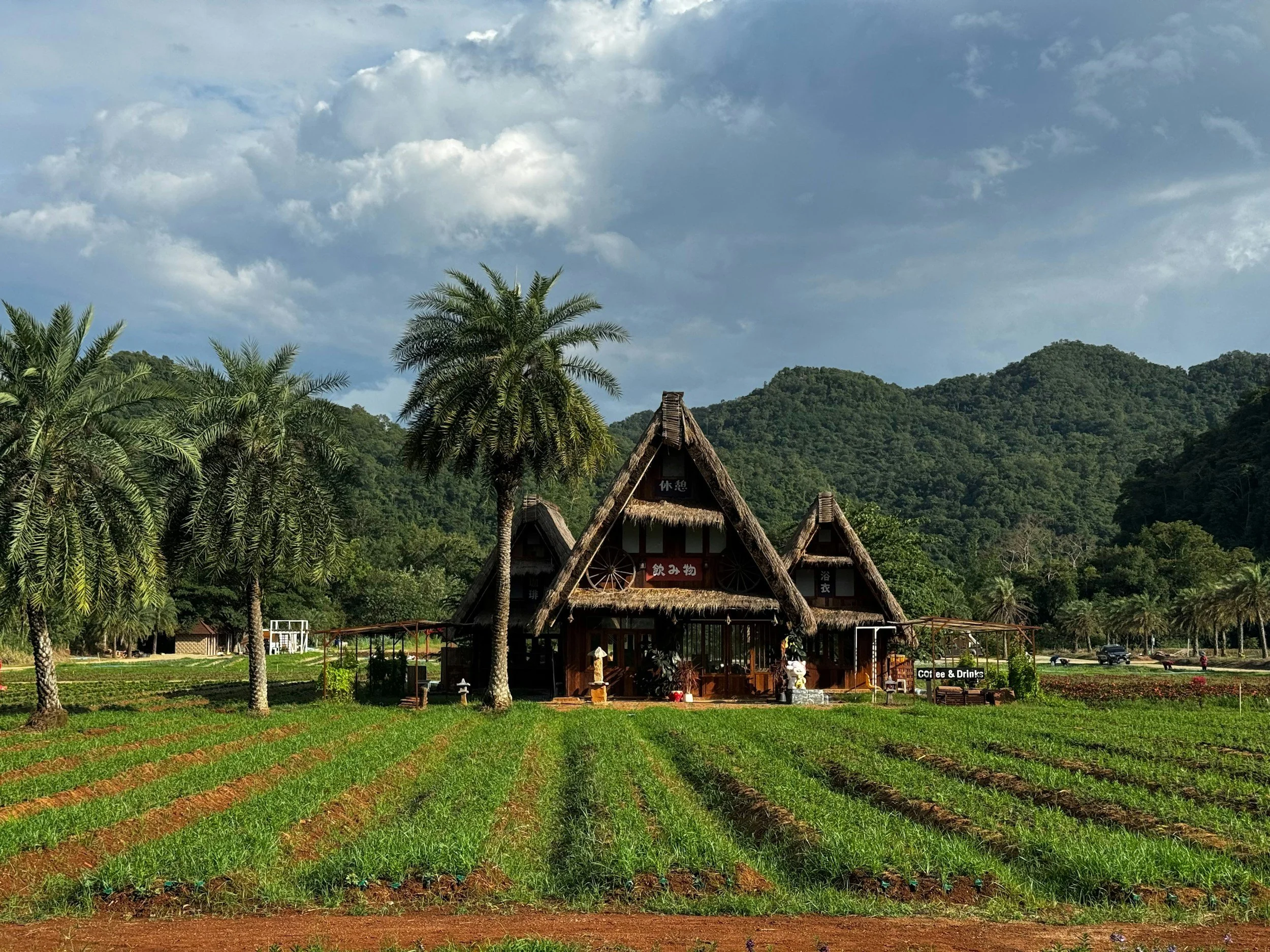
Not for lack of passion. Not for lack of courage. But because of three methodological mistakes that can — finally — be avoided.
Every week, I speak with land owners who have the same look in their eyes. The look of someone carrying an enormous dream — a piece of land to regenerate, a productive farm, a place that actually means something — but who is starting to feel that dream grow heavier than expected.
It is not a motivation problem. It is not a values problem. It is not a work ethic problem.
It is a method problem.
In this article, I share the three root mistakes I observe in almost every eco-farm or eco-place project that struggles to become profitable. I share them without judgment — because every single one of them is avoidable, as long as you see them early enough.
"A profitable eco-farm is not just a beautiful place. It is a clear product, an assumed price, and a mastered acquisition system."
Root mistake #1
No clear entrepreneurial structure
The scenario is almost always the same. You dream of a productive farm, guest accommodations, workshops, training courses, maybe even a community. The dream is right. But you want to launch everything at once, on a foundation that is still fragile.
An eco-farm is not just a life project. It is a business — with financial flows, clients, operations, strategic decisions. And many project founders launch without prior entrepreneurial experience on the kind of project that would already require a seasoned business owner.
The result: complexity explodes. Cash flow doesn't keep up. Exhaustion sets in. And the dream becomes very heavy to carry.
I don't use chemical pesticides. Not a drop. Instead, I use plants — specifically herbs — to create a protective border around everything I'm growing. Herbs like thyme, oregano, rosemary, and basil work in two ways: their strong scents confuse and repel pests before they even reach your vegetables, and they attract beneficial insects that actively hunt the bad ones down.
The result is a self-regulating ecosystem at the edges of your beds, doing the pest-management work so you never have to reach for a spray bottle.
What works instead
The key is a progressive approach. Start with one profitable first brick — just one. Master it, stabilize it, generate cash. Those first bricks are what fund the big dream later on.
It is exactly the same principle as permaculture: start small, master your system, then expand.
Run training courses on third-party land before buying your own farm
Launch one single well-designed, well-marketed cabin — learn to fill it before building ten
Test your concept with existing partners before investing hundreds of thousands of dollars
The land does not come first. The business model is thought through first — and it conditions everything else.
Root mistake #2
No clear business model : Project Identity
Many eco-farm founders want to create something sincere, human, accessible. And they carry a complicated relationship with money, sales, and commerce. The result: they move forward on intuition, passion, feeling.
But a business does not run on feeling alone. It runs on a precise economic model.
The "talking to everyone" trap
The first pitfall: not positioning yourself. You want to welcome families, couples, groups, tourists, locals… The message becomes broad, vague, interchangeable. And when you speak to everyone, you speak clearly to no one.
Here are real examples of places that chose a precise niche — and thrived because of it:
Real example
Beekeepers installed inside a stargazing nature reserve, offering a niche blend of horse and nature immersion and hands‑on education. Not a generic accommodation — a truly unique, restorative experience that connects guests with the rhythms of the land and the life of the hive.
Real example
Kulumbari Farm ( Human connection )
A permaculture farm built around food sovereignty and resilient living in Africa. The owners have an education bagrouwned care about connecting the young europeen to africain lifestyle experience. experience a truly autonomous lifestyle. Not just sleeping in a tent — living a vision.
In each case: a clear audience, a precise promise, a coherent experience. And a much stronger business model as a result.
Root mistake #3
No solid marketing and sales system
The belief: "If my place is beautiful and the experience is genuine, people will come naturally. Word of mouth will do the rest." In an ideal world, maybe. In the real world: NOOOO.
Ecological tourism is a competitive market. There are thousands of nature retreats, hundreds of unique accommodations, dozens of wellness getaways. Without visibility, a place stays unknown — even if it is extraordinary.
What you typically see
A nice website. A few Instagram posts. A listing on Airbnb or Booking. And then — waiting.
But there is no real client acquisition strategy. No email list. No lasting client relationship. No rebooking sequence. No off-season offer. The result: short seasons, gaps in the calendar, dependence on platforms, and commissions eating into already thin margins.
The fear of selling and what it costs
Many eco-farm founders love welcoming guests, sharing their world, creating connection. But the moment it comes to talking about prices, proposing an offer during a stay, following up, building a client journey — they freeze.
Every upsell not proposed. Every option not mentioned. Every returning client not invited back. That is revenue lost, over and over again.
And then there is seasonality. Many places suffer through it when it can be anticipated — off-season retreats, themed stays, corporate privatizations, long residencies. But for any of that to work, you need a commercial calendar, a strategy, partnerships, and an active client base. Without a solid marketing system, you improvise. And improvisation is expensive.
The core principle
A profitable eco-farm is built on three aligned elements:
1/ A clear, tested, positioned product.
2/A price that reflects real value.
3/ A system of acquisition, follow-up, and referral that is owned , not borrowed from a platform.
When these three are aligned, occupancy becomes predictable. Margins breathe. Delegation becomes possible. And you rediscover the freedom you imagined when you first started.
Ready to Take the Next Step?
If this guide has spoken to you — if you're standing on a piece of land wondering what it could become, or planning an eco-farm and feeling overwhelmed by where to start — I'd love to talk.
I offer personalised regenerative design consultations tailored to your land, your vision, and your practical reality. Whether you're at the very beginning or already a few years in and looking for a fresh perspective, this is where the real design work begins.
Book a consultation with Soumia →
You can also explore my ebooks and workshops in the Online Boutique — practical resources for landowners and eco-farm founders who want to go deeper on specific aspects of regenerative design.