How To Design Farm Hospitality Experiences that Bring Order to Business Chaos
Most agritourism ventures start with passion and end in operational overwhelm. Here is how structured hospitality design turns a working farm into a thriving, scalable business.
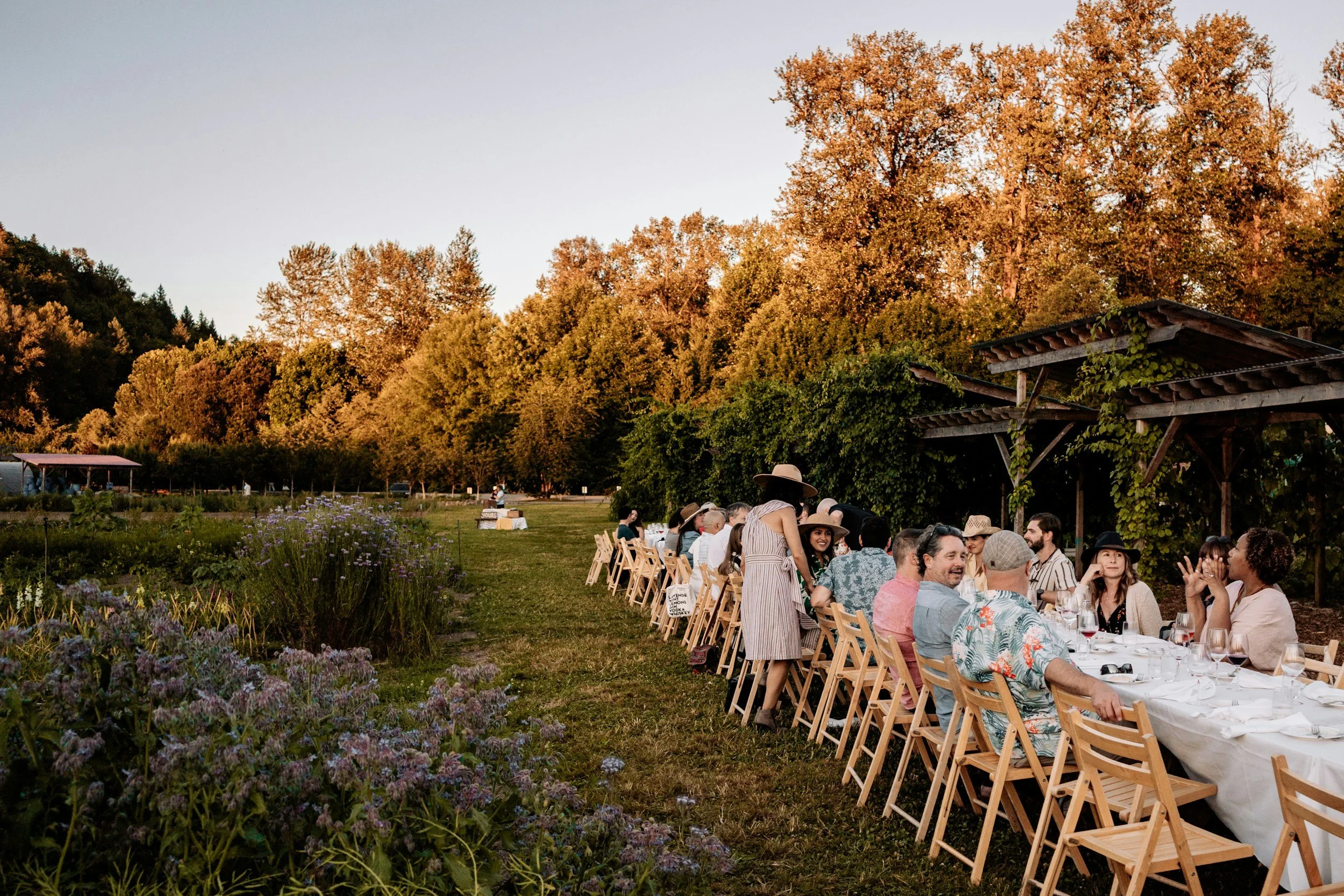
"A farm without a hospitality design system is just a beautiful place that frustrates both its owners and its guests."Farm Business Hospitality Principle
Picture this: peak harvest weekend. Forty guests are arriving for a farm-to-table dinner, three families have booked your glamping cabins, and your team is still scrabbling to figure out who handles check-ins, who runs the tour, and where the dietary preferences were saved. Sound familiar? That is not a staffing problem — it is a design problem. And it is costing you revenue, reputation, and rest.
Farm hospitality is one of the fastest-growing segments of both the agricultural and experience economy. But most farm owners who enter it approach it the same way they would a spontaneous barn raising — with goodwill, muscle, and zero blueprint.
The result is a chaotic guest experience that burns out even the most energetic operators within a season.
The farms that succeed long-term are not necessarily the most scenic or the most Instagram-worthy. They are the ones whose owners made a conscious decision to treat hospitality as a designed system, not an improvised performance.
After working with agritourism operations across multiple regions, I have distilled that transformation into a replicable framework — and it starts with understanding what good design actually delivers.
Many farm owners focus on production.
Others focus on aesthetics.
Some focus on impact.
But very few truly connect all three.
And this is where projects start to struggle:
Too much effort for too little return
Too many ideas without coherence
Too much beauty without viability
The missing piece is not more work.
It’s alignment.
What I Learned From Being Inside the System
Running a farm, even partially forces clarity.
You can’t hide behind concepts.
Every choice becomes visible:
Does this bring value?
Does this cost too much energy?
Does this serve the experience?
Does this support the vision?
And this is where intentional design becomes essential.
Not as an artistic layer.
But as a structural one.
A New Way to Approach Farm Design
Through this journey, I started to see that successful farm projects — especially those rooted in hospitality and experience — rely on three essential dimensions.
Three parts that need to work together.
Not separately.
Not randomly.
But intentionally.
What’s Coming Next
In the next three posts, I’ll break down the core elements that transform a farm from “busy and beautiful” into clear, impactful, and financially sustainable:
Part One
5 Business Benefits of Intentional Farm Hospitality Design
We’ll explore how design, when aligned with purpose, directly impacts revenue, attraction, and long-term stability.
Part Two
How To Build Your Farm Hospitality Design System in 4 Steps
A clear framework to move from scattered ideas to a coherent, functional, and magnetic farm experience.
Part Three
The Design Pitfalls That Quietly Sink Farm Businesses
The subtle mistakes that drain energy, money, and clarity — even in well-intentioned projects.
This is not theory.
This comes from experience — from being inside the system, where every decision has weight.
So if you’re building a farm that wants to be both meaningful and profitable…
Stay with this series.
Because design can absolutely change everything.
But only when it’s used with purpose.
A Practical Step You Can Start With
If you’re realizing that your farm is missing this layer, I’ve put together a simple guide to help you structure it.
It’s a practical ebook where I break down how to design sensory experiences on your land — so your visitors don’t just see your farm, they feel it.